
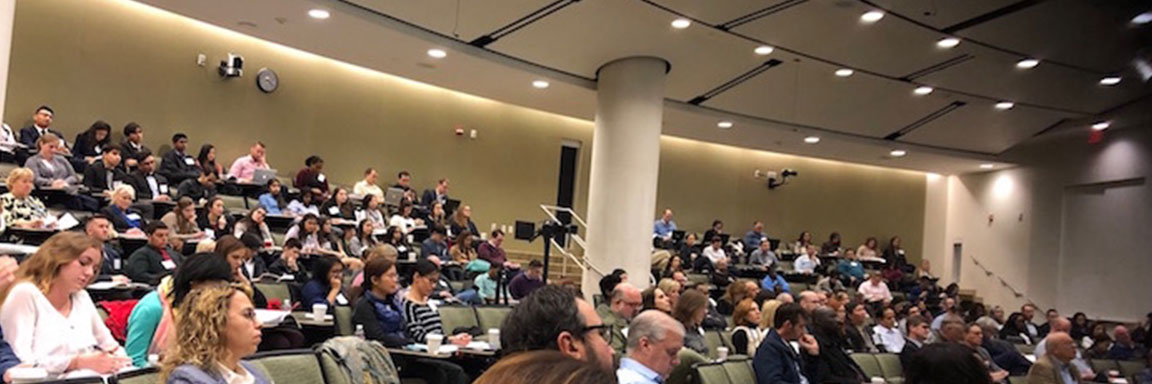
Houston Area Molecular Biophysics Training Program (HAMBP)

Funded by the National Institutes of Health grant T32GM150582 (2025-2030) to Baylor College of Medicine
Providing a unique, inter-institutional biophysical training experience with leading institutions and the latest technology.
Program Director:
Theodore Wensel, PhD, Professor
Biochemistry and Molecular Pharmacology, Baylor College of Medicine
Program Co-Director:
Ming Zhou, PhD, Professor
Biochemistry and Molecular Pharmacology, Baylor College of Medicine
Program Administrator:
Elizabeth Lawrence
Keck Center, Gulf Coast Consortia
The inter-institutional nature of the HAMBP program provides a rich variety of biophysical training with ready access to state of the art resources and leading scientists at Baylor College of Medicine, Rice University, University of Houston, University of Texas Health Science Center at Houston, University of Texas MD Anderson Cancer Center and University of Texas Medical Branch at Galveston.
Specific research areas include: mass spectrometry, cryo-electron microscopy, raman spectroscopy, NMR of proteins and nucleic acids, X-ray crystallography, rapid kinetics, computational biology, digital imaging, fluorescent spectroscopy, protein engineering and membrane biophysics.
Trainee Eligibility
PhD students from Baylor College of Medicine, Rice University, University of Houston, University of Texas Health Science Center at Houston, University of Texas MD Anderson Cancer Center, and University of Texas Medical Branch at Galveston are eligible to apply.
- Students must be US citizens or Permanent Residents.
- Students must select a mentor from the HAMBP Training Faculty. Mentors can apply for HAMBP membership simultaneously with their student’s application.
- Students should be in their first year of thesis research (i.e., having recently joined a laboratory, usually about to enter year 2 of a Ph.D. program).
- Students should be pursuing Ph.D. thesis research in the area of Molecular Biophysics, or making extensive use of the approaches of Molecular Biophysics.
Current Trainees
Click here to meet our current cohort of HAMBP trainees.
HAMBP Fellowship Application
HAMBP is not currently accepting applications at the moment.
IMPORTANT: Please Review Eligibility Criteria above prior to completing an application.
How to Request Joining HAMBP Training Faculty:
Email a recent NIH Biosketch including peer-reviewed funding and a brief statement on how your research relates to the HAMBP goals to Program Director Dr. Ted Wensel and copy Elizabeth Lawrence, Program Administrator.
Requests should be submitted at the same time as your student’s application.
FELLOWSHIP BENEFITS AND REQUIREMENTS Appointments are for one year and include funds to cover partial stipends, tuition, health insurance and modest travel funds. Students not meeting citizenship/residency requirements can apply for unfunded trainee positions. Appointments are for one year, but may be extended for a second year, dependent upon a successful progress review and continued funding from the NIH. Trainees and Mentors agree to participate in HAMBP activities and meet program requirements.
Expectations of supported students and their mentors:
- Didactic coursework and workshops associated with program:
- course in Molecular Biophysics (BCM GS-CP-6304, and GS-CP-6305; UTMB BCMB 6113 and BCMB 6114; or Rice University BIOS 551),
- two electives approved by the Program Director;
- NIH-compliant Responsible Conduct of Research Training;
- Keck/GCC rigor and reproducibility workshop;
- trainee attendance at weekly GCC Keck Seminars;
- trainee completion of an updated Independent Development Plan (IDP) and attendance of at least 4 career development workshops during a two-year appointment;
- Acknowledgement of the program and grant in all publications and presentations related to their thesis research; Publications must be compliant with NIH open access requirements;
- Trainee attendance at monthly trainee meetings;
- Trainee and mentor attendance at annual Research Retreat and Progress Review;
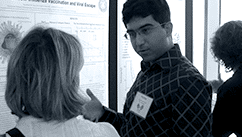
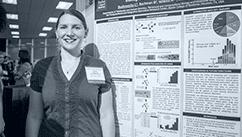
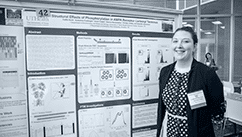
- Trainee poster presentations at annual Sealy Center Structural Biology Symposium, Keck Annual Research Conference, and GCC Annual Cell and Molecular Biophysics Symposium;
- National research meeting attendance (typically the Biophysical Society annual meeting); provide updates on trainee career progress after program completion.
APPLICATION INSTRUCTIONS
(NOTE: Application form will not open in Chrome unless you’ve disabled Chrome’s built-in PDF viewer in your settings.)
IMPORTANT: You must contact your Institutional Representative from the list of HAMBP Steering Committee members pictured below prior to completing an application. The applicant or the applicant’s mentor should reach out to the designated Steering Committee member at the applicant’s institution to discuss the applicant’s background and project prior to completing an application. This step is a verified component of the HAMBP Application Form.
Complete and submit the HAMBP Application Form and email to Elizabeth Lawrence.
Please be certain to fill out the application COMPLETELY – include both undergraduate and graduate GPA.
Complete and submit the Project Information document* (word format) and email to Elizabeth Lawrence and include the following sections:
– Project Description (max 1,000 words)
– Layperson’s Project Description (max 250 words)
– Career Goals (max 500 words) – Mentoring Plan (max 500 words)
– Grant Support *Please see full list of detailed requirements for this document in the HAMBP Application Form
Mentor must submit Mentor Recommendation Letter by email directly to Elizabeth Lawrence. Only one mentor is required for the HAMBP program although dual mentorship is welcome. This letter should evaluate the applicant in terms of his/her suitability for a research career in molecular biophysics and should specifically address the following areas:
– Scientific background and prior training
– Research experience and skills
– Quantitative skills, aptitude and training
– Work ethic
– Communication skills
– Ability to work with others
– Mentor’s approval of applicant’s Mentoring Plan
Secure two Letters of Recommendation from people other than your mentor. Recommenders should submit their letters directly to Elizabeth Lawrence.
Submit Transcripts from all undergraduate and graduate coursework (Unofficial preferred, Official accepted) to Elizabeth Lawrence.
Submit a current resume (CV) outlining your professional work experience and history to Elizabeth Lawrence.
Submit proof of citizenship (e.g. copy of passport/birth certificate/Green Card) to Elizabeth Lawrence.
***Please Note: All application materials, including all three required recommendation letters, must be RECEIVED by the deadline above.
HAMBP Program Administrator:
Elizabeth Lawrence
6100 Main St., MS-141 Houston, TX 77005
el53@rice.edu
|
|
Dr. Ming Zhou, Co-Program Director |
|
Dr. Yimo Han |

Dr. Yizhi (Jane) Tao |
|
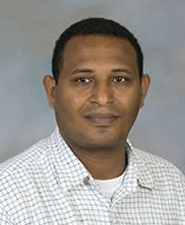
Dr. Alemayehu (Alex) Gorfe |
|
|
Dr. Thomas Smith |
|
|
Dr. Tai-Yen Chen |
|
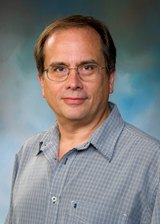
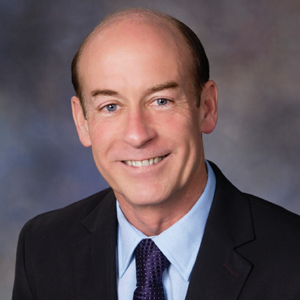 Dr. Theodore Wensel, Program Director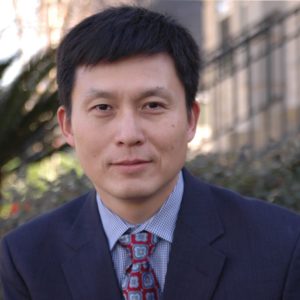





Expectations of supported students and their mentors:
- Didactic coursework and workshops associated with program:
- course in Molecular Biophysics (BCM GS-CP-6304, and GS-CP-6305; UTMB BCMB 6334; or Rice University BIOS 551),
- two electives approved by the Program Director;
- NIH-compliant Responsible Conduct of Research Training;
- GCC rigor and reproducibility workshops: general workshop (fall/spring) and targeted workshop in summer;
- trainee attendance at weekly GCC Keck Seminars;
- trainee completion of an updated Independent Development Plan (IDP) and
- attendance of at least 4 career development workshops during a two-year appointment;
- Acknowledgement of the program and grant in all publications and presentations related to their thesis research; Publications must be compliant with NIH open access requirements;
- Trainee attendance at monthly trainee meetings;
- Trainee and mentor attendance at annual Research Retreat and Progress Review;
- Trainee poster presentations at annual Sealy Center Structural Biology Symposium, GCC/Keck Annual Research Conference, and GCC Annual Cell and Molecular Biophysics Symposium;
- National research meeting attendance and poster presentation (typically the Biophysical Society annual meeting);
- Provide updates on trainee career progress after program completion.
Inter-Institutional and Graduate School links:
Inter-Institutional Graduate Student Enrollment
Responsible Conduct of Research requirement: As the HAMBP training program is funded by the National Institutes of Health (NIH), per NIH regulation NOT-OD-10-019 all trainees must take an approved Responsible Conduct of Research course at the graduate school level. Even if the trainee has taken an ethics course while an undergraduate, or an online course such as from CITI, the trainee must still take a course at the graduate level (online courses by themselves do not fulfill NIH requirements). Trainees must provide the GCC with a transcript or certificate as proof of completion.
The following are approved Responsible Conduct of Research courses:
1. BCM: GS-GS 5101, -5102, -5103, and -5104 Responsible Conduct of Research
2. UTHSC-H /MD Anderson: GS211051 The Ethical Dimensions of the Biomedical Sciences
3. Rice University: UNIV 594 Responsible Conduct of Research
4. University of Houston: BIOL 6120 Responsible Conduct of Biological Research
5. UTMB: BBSC 6129 Responsible Conduct in Biomedical Research (3 terms).
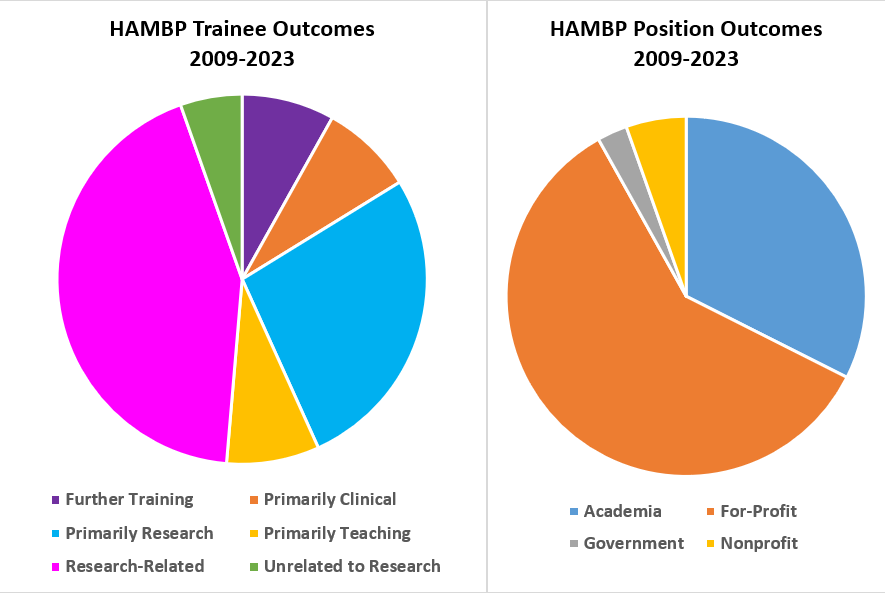
15-year Trainee Outcomes for predecessor grant (T32GM008280) as of September 2023:
During the period 2009-2023 (Grant years 21-35), 55 predoctoral (PhD students) were supported by our HAMBP Training Program, including those currently appointed.
Of the 55 HAMBP predoctoral trainees:
- Of the 40 trainees who have graduated, 38 (95%) trainees completed their PhDs and 2 received Master’s Degrees.
- Of the 38 who received a PhD, 26 (68%) are in research-intensive or research-related positions, 3 (8%) are in primarily teaching positions, 3 (8%) are continuing their training as postdoctoral fellows, 3 (8%) are in primarily clinical positions, 2 (5%) are unrelated to research, and 1 (3%) is deceased.
- 12 (32%) are employed in academia (g., assistant professor, adjunct professor, high school teacher; postdoctoral researcher; science editor, and computational biologist);
- 22 (58%) are in biotech and industry (g., scientific advisor in industry, medical informatics scientist, and outcome analyst);
- 1 (3%) are in government (g., health program specialist);
- 2 (5%) are in nonprofits (g. medical or healthcare institutes); and
- 1 (3%) is deceased.
- Of the 15 predoctoral trainees (9 current trainees, 6 former trainees) who remain enrolled in good standing in their respective schools, all are expected to complete their graduate training on a timely basis; of the 6 former trainees, all anticipate completing graduate training between 2024 and 2026.
The average time to a PhD degree, from 2009-2023, is 5.38 years for 38 trainees