
Immunology Training Program (ITP)

ITP is funded by the National Institute of Allergy and Infectious Diseases (NIAID), T32 AI186973 to Baylor College of Medicine (BCM).
The Immunology Training Program (ITP) is a new, interinstitutional training program for PhD students. It was funded in 2026 by the National Institute of Allergy and Infectious Diseases (NIAID).
Importance: The majority, if not all, chronic human diseases are fundamentally immunological disorders, involving either excessive inflammation that produces unremitting disease or insufficient inflammation that is needed to resolve either infectious or malignant threats. Examples of the former include autoimmune or autoinflammatory disorders such as rheumatoid arthritis and familial Mediterranean fever; examples of the latter include disseminated tuberculosis and cancers of any kind.
The goal of ITP is to provide predoctoral training in translational Immunology with an appreciation and understanding of the relationship between immunogically-driven research and the treatment of chronic human diseases.
Trainees in ITP will be in an interdisciplinary and inter-institutional training environment with mentors who will guide them in acquiring skills and knowledge in various areas of Immunology.
Our objectives are to:
- train promising young scientists with a passion for multi-disciplinary Immunology research
- assist trainees in developing skills, knowledge and independence in ethical research;
- build trainee and mentor skills that lead to a mutually strong, supportive and productive mentoring relationship with co-mentors
- provide experiences that contribute to trainees’ ability to work in teams, enabling them to communicate and fill the gap between basic and clinical research
- provide training to enhance trainee understanding of research careers and build confidence in their ability to attain successful careers in biomedical research focused on Immunology.
Our mission is to support and enhance the training associated with cross-disciplinary alliances, connecting the science of Immunology with clinical research in autoimmune disease, asthma, cancer, lung disease, hypertension, cancer, viral diseases, tropical diseases, neurodegenerative diseases and others. We envision ITP developing exceptional scientists capable of taking action to impact the treatment of Immunological conditions and diseases.
Program Director:
David Corry, MD
Professor, Pathology & Immunology, Medicine, Vice Chair for Immunology, Department of Pathology & Immunology, Baylor College of Medicine
Program Co-Director:
Roza Nurieva, PhD
Professor, Department of Immunology, UT MD Anderson Cancer Center
Administrative Support:
Vicki Alger
Associate Director, Training and Evaluation, Gulf Coast Consortia/Keck Center
Participating Institutions

Applications due September 8, 2026.
Trainee Eligibility
PhD students from UTHealth Houston, MD Anderson Cancer Center (MDA), and Baylor College of Medicine (BCM) are eligible to apply.
- Students must be US citizens, or Permanent Residents with a valid Permanent Resident card.
- Students must have chosen their primary thesis advisor.
- Students may apply in their second or third year of the PhD program.
- Applicants must select a mentor and a co-mentor from the ITP Training Faculty (See list below.) Mentors may apply to join the ITP Training Faculty (see below).
Ideally, predoctoral applicants to ITP will have an educational background in immunology, microbiology, biochemistry or cell biology. Trainee ITP research projects may reflect areas such as
- the complexity and diversity of the immune system including cancer Immunology, infectious diseases, and inflammation
- fundamental principles governing normal and disease states at the molecular and cellular level to address inflammation and microbial resistance and to identify and validate drug targets and potential drug interventions.
Appointment:
- Up to 2 years, with 2nd year based on Y1 research progress and adherence to ITP requirements.
All ITP trainees will have a primary mentor (PI of trainee’s lab) and a secondary mentor, forming a co-mentorship with complementary Immunology areas. We encourage the co-mentorship to include an MD and a PhD faculty. (see Faculty list).
The trainee and co-mentors collaborate on the development of the T32 project (based on the trainee’s thesis project) and on a mentoring plan to ensure clear communication, training and responsibilities, such as project updates, lab meetings and manuscript preparation. Trainee projects typically fall at the intersection of the research interests of the co-mentors but may be shaped by the trainee.
This multidisciplinary co-mentorship will foster innovation and encourage trainees to maintain an “open mind” approach with important emphasis on translational aspects of their T32 Immunology research project.
Our training program includes the following elements:
Research Project
Trainees will spend the greatest part of their training time engaged in original cutting-edge research with their primary and secondary mentors, which culminates in peer-reviewed publications and first-class dissertations.
We also encourage ITP trainees to select two or three ITP training faculty to serve on their thesis committee.
Strong Core Curriculum
All trainees will have completed coursework in statistics or in a quantitative science (or must do so during the first year of their ITP appointment). This background will ensure trainees have the appropriate preparation, motivation, and resources to successfully complete the ITP training program and pursue independent careers. (BCM: Foundations A/B: Molecules to Systems R; Foundations A/B: Biostatistics; Concepts in Host Immune System-Microbe Interaction I/II; Experimental Immunology & Microbiology; MDA/UTH: Fundamental Immunology; Emerging Concepts in Immunology; Topics in Microbiology and Infectious Diseases; Foundations of Biomedical Research)
- Immunology Foundations Course. This 6-week certificate course, to be held each Fall, serves as a means of meeting the translational needs of ITP trainees by covering major topics in translational Immunology as see through the eyes of ITP faculty. The course is required for ITP trainees but will be open to all researchers pursuing increased exposure and understanding of the breadth and depth of Immunology. Course outline, topics and dates are TBD.
- ITP Faculty Lab Visits. Four times a year, trainees will be invited to tour faculty labs in conjunction with this course.
- Electives. ITP trainees also select at least one elective course from the list of offerings. Additional courses may be required or strongly recommended to further develop experimental design, data and statistical analysis, or professional skills. (BCM: Principles of Immunology; Cells, Tissues & Organs; Bacterial Pathogenesis; Immunology; Vaccinology; Clinical Aspects of Immunology; MDA/UTH: Advanced Topics in Immunology; Application of Tumor Immunology in the Clinical Setting; Principles of Therapeutics; Principles of Stem Cell Biology; Molecular Basis of Cell Signaling; Introduction to Bioinformatics)
- AI and Machine Learning (ML) workshops. These workshops are organized by the GCC. ITP trainees take a minimum of one workshop each year over a 2-year appointment period.
- Responsible Conduct of Research. Trainees must submit transcripts for this course(s) to ensure they are complying with ITP requirements.
ITP Trainee Activities
These are intended to give predoc trainees opportunities to network, get to know and reach out to each other, and to work effectively with colleagues from various backgrounds and with various research focus. The following activities are required:
- ITP Annual Retreat, a ½-day event to be held every year in early Summer. Trainees give a 20-minute talk
- Monthly ITP trainee meetings are planned and organized by the trainees, who may invite faculty to give talk, practice giving important talks and poster presentations, visit ITP faculty labs, or invite experts in science-related fields
- GCC Annual Research Conference and Poster Session promotes interaction and discussion among Houston-area students, postdoctoral fellows, faculty and industry. The 2026 Conference will be November 6. All ITP trainees will present posters on their projects.
- Gulf Coast Consortium Immunology monthly seminars are held each month during the academic year, in person and via Zoom. Speakers are local as well as national.
- Gulf Coast Consortium for Immunology Annual Future of Immunology Symposium is an opportunity for poster and oral presentations and a valuable opportunity to learn about the cutting-edge Immunology research occurring in the TMC, as well as to network with exceptional researchers.
- Rigor and Reproducibility workshops are held several times a year. ITP trainees are required to participate in one general workshop and at least one targeted workshop most relevant to their particular research.
Career Development
To ensure readiness for diverse career paths, ITP offers structured activities, career development advising, and a breadth of learning opportunities including workshops and IDPs. ITP trainees are required to select a minimum of 4 career development workshops, courses or seminars during their 2-year appointment.
Applications due September 8, 2026.
IMPORTANT: Please review Trainee Eligibility criteria above prior to completing an application.
ITP APPLICATION INSTRUCTIONS
NOTE: All application materials, including letters of recommendation and all transcripts, must be received on or before the deadline.
ITP_Application_form_due 09.08.2026
ITP_mentor_rec_form_due 09.08.2026
Applicants, please complete and send the application form, project information document, transcripts, NIH Fellowship Biosketch, and proof of eligibility in one email to Vicki Alger va22@rice.edu by the deadline named above.
Be sure to inform your mentor and your other recommender that their letters of recommendation are also due by the deadline above, emailed directly to Vicki Alger va22@rice.edu. Mentors may either submit the IITP_mentor_rec_form_due 09.08.2026 or a letter including the required elements named in #4 below.
Complete and submit the ITP_Application_form_due 09.08.2026. Be certain to fill out the application COMPLETELY.
How to calculate months of prior research experience for the application form:
Include research starting after you completed high school, up until you began your PhD program. If you have a terminal Master’s degree, include research from that time. Include research done during the summer and during the academic year (including rotations). Do not include labs associated with a course (e.g. chemistry course with lab). For part-time research, convert the part-time experience to full time (40 hours/week = 160 hours/month). For example, if you worked 15 hours/week for 8 months: 15 hours/week x 32 weeks = 480 hours/160 hours = 3 months of full-time research.
Complete and submit the Project Information document* (word format) via email to Vicki Alger at va22@rice.edu, and include the following sections:
– Project Description (maximum one page)
– Layperson’s Project Description (max 250 words)
– Career Goals (max 500 words)
– Mentoring Plan (max 500 words)
– Grant Support
*Please see full list of detailed requirements for this document in the ITP_Application_form_due 09.08.2026.
Submit the following application materials:
- Transcripts from your current graduate program, as well as from all undergraduate and graduate degrees you have received (Official copies are preferred, unofficial copies are acceptable.).
- An NIH Fellowship Biosketch: include undergraduate GPA, honors, awards, research experience, and GRE scores; in the Contributions section in separate numbered lists, include your presentations, and abstracts and publications, if any.
- Proof of eligibility: a scan (not photo) of your passport or birth certificate; or valid permanent resident card.
- Mentor Recommendation Form or Letter. Your mentor must submit the form or a letter directly to Vicki Alger by the deadline named above. The letter should evaluate the student in terms of his/her suitability for a research career in microbiology or microbiology-related science and should specifically address the following areas:
- Research experience and skills
- Progress to date in their lab
- Communication skills (written and oral)
- Mentor’s approval of applicant’s Mentoring Plan.
- One Letter of Recommendation from someone other than your mentor. The recommender should submit their letter directly to Vicki Alger by the deadline named above.
SELECTION PROCESS (Interview)
Selected applicants will be invited to interview with the ITP Steering Committee. The interview will:
- Be attended by applicant and mentor
- Consist of a 10-minute research talk by the applicant with slides describing the proposed ITP research project and its Specific Aims, followed by 5 minutes for Q&A.
This interview is critical to robustly assess the applicant’s suitability for ITP and potential for success during and after the Program, including the ability to communicate his/her science. The Steering Committee will discuss each applicant and make final selections based on merit. All applicants will be notified by email about the outcome of their interviews.
APPOINTMENT INFORMATION (For academic year 2026-27)
- Appointments anticipated to begin October 1, 2026.
- Appointments will be for 1 year, with potential for a 2nd year. The 2nd year appointment is dependent upon 1) successful completion of program requirements in year 1, and 2) continued NIH funding.
- Trainees and mentors will participate in progress reviews at 6- and 12-months with the ITP Steering Committee. If trainee progress is acceptable, the trainee could receive a 2nd year of support. Trainees and mentors are also expected to participate in an interview at the end of their ITP training appointment.
- Stipend level: $29,364 (per NIH FY26 level)
- Travel: anticipated $1,000 (Required poster or oral presentation at selected conferences)
- Some funds will be provided to help defray costs of trainee tuition, health insurance, and childcare costs.
Per NIH requirement, trainees must acknowledge full or partial support of their research in all abstracts, journal publications, oral or poster presentations, news releases, and other communications, stating, at minimum: (Trainee name or initials) is supported by an ITP fellowship T32 AI186973.
List of current ITP faculty
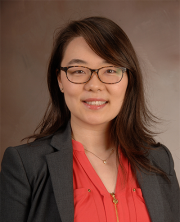
Led by Dr. Corry, the Steering Committee represents each ITP partner institution, engages in ITP activities, and all are experienced mentors and faculty in T32 programs.
|
|
|
|
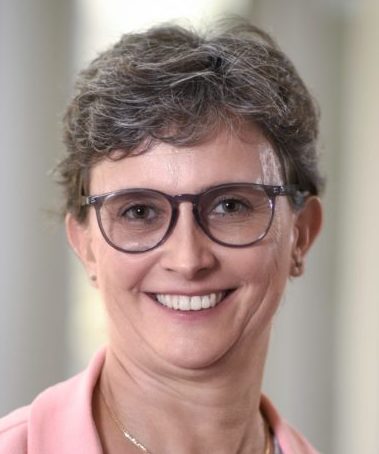
Christine Beeton, PhD, Professor, Integrative Physiology, Baylor College of Medicine |
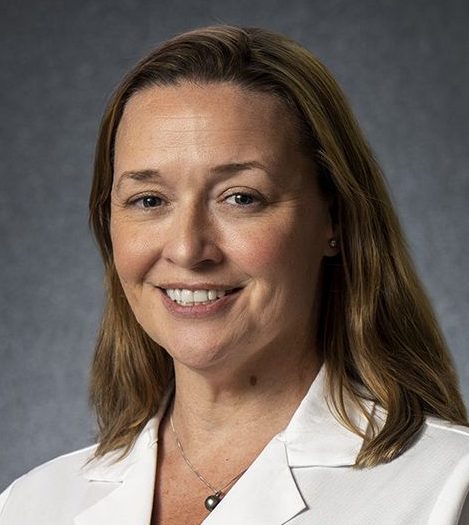
Lisa Bouchier-Hays, PhD, Assistant Professor, Pediatrics, Hematology-Oncology Cell & Gene Therapy, Baylor College of Medicine |
|
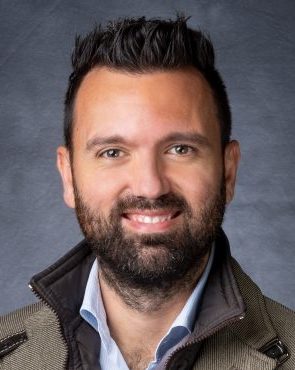
Mauro Di Pilato, PhD, Assistant Professor, Immunology, UT MD Anderson Cancer Center |
Cynthia (Changqing) Ju, PhD, Professor, Anesthesiology, UTHealth Houston |
|
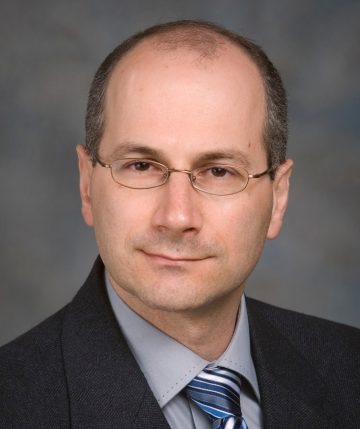
Seyed Moghaddam, MD, Professor, Pulmonary Medicine, Immunology, UT MD Anderson Cancer Center |
Xiaoyi Yuan, PhD, Assistant Professor, Anesthesiology, UTHealth Houston |

TBD